
Hesco systems are used across flood mitigation, force protection, perimeter security and infrastructure protection. The range includes more than just barrier walls, with different configurations suited to containment, protective works and temporary site protection.
Rather than thinking of Hesco as one product, it is better understood as a modular system range. Different unit types, sizes and layouts allow the system to be adapted to very different operating environments and protection requirements.
This article looks at the main Hesco system types, how the sizing works and where these systems are commonly used.
What is a Hesco system?
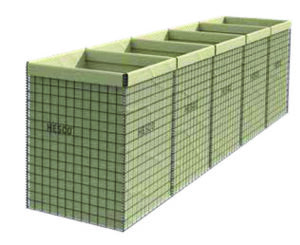
At its core, a Hesco system is a collapsible wire mesh unit lined with heavy-duty geotextile fabric. It is delivered flat-packed, expanded into position and then filled with sand, soil, gravel or other suitable material. Once filled, it forms a stable barrier, bund or protective structure.
The strength of the system is in its modular design. Units can be linked together, extended in long runs and selected in different sizes depending on the job. That flexibility is what makes Hesco systems suitable for flood response, defence, site protection and containment applications.
Why Hesco systems are used
Hesco systems are widely used because they are fast to deploy, easy to scale and practical in the field. Compared with sandbagging or more labour-intensive temporary works, they provide a faster and more structured way to build protection on site.
They also reduce manual handling. Instead of filling and stacking large numbers of individual bags, crews can position the units and fill them using locally available material. That saves time, reduces labour and creates a more consistent result.
For larger jobs, that difference becomes significant.
Flood barriers
Flood barriers are one of the best-known Hesco applications. These systems are used to create temporary levees, protect infrastructure, defend access routes and help redirect water away from critical areas.
They are especially useful when a site needs rapid protection and traditional sandbagging would take too long or require too many people. Once deployed and filled, the barrier provides a stable and scalable flood defence line that can be extended as needed.
Flood barrier systems are commonly used for:
- temporary flood mitigation
- facility and asset protection
- road and access point protection
- riverbank and edge defence
- critical infrastructure protection during severe weather events
This is also why Hesco systems are often discussed as a sandbag alternative.
Military barriers
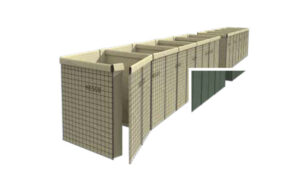
Military barriers are another major part of the Hesco range. These systems are used where the requirement goes beyond water control and into force protection, stand-off protection and perimeter security.
In defence and security environments, they can be used to create perimeter walls, shield infrastructure, protect vehicle areas and support temporary or semi-permanent protective works. The same modular concept applies, but the selected barrier size and layout will depend on the protection level required and the available footprint on site.
Military barrier systems are commonly used for:
- perimeter protection
- force protection
- entry control points
- vehicle and equipment area protection
- temporary or semi-permanent defensive works
While the term suggests a defence-only application, the same system logic can also apply to exposed infrastructure, utilities and critical sites where physical protection is required.
Protective structures
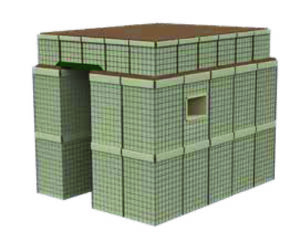
Not every Hesco application fits neatly under the word barrier. Some configurations are better understood as protective structures, where the system is used to create a defined protective outcome rather than a simple line of filled cells.
Depending on the requirement, these systems can support protected positions, reinforced site features, temporary protective works and other modular protective forms. The key point is that the same base system can be configured in different ways depending on the job.
Hesco is not just about stopping water or forming walls. It is also about creating practical, rapidly deployable protection where permanent construction is not suitable or not yet available.
How Hesco sizing works
Sizing is one of the most important parts of selecting the right Hesco system. Different heights, widths and cell layouts are used depending on the application.
Some units are lower and more compact, making them suitable for smaller containment tasks, lower-profile flood protection or areas with limited space. Others are taller and wider, giving greater mass and a more substantial protective outcome.
When looking at sizing, the main questions are usually:
- How high does the barrier or structure need to be?
- How much width is needed for stability and protection?
- How much space is available on site?
- What fill material is available locally?
- Is the application flood mitigation, containment, perimeter control or force protection?
- Is the system for short-term, seasonal or longer-duration use?
The right size depends on the outcome required.
What Hesco systems are filled with
One of the practical advantages of Hesco systems is that they are generally filled with locally available material. That may include sand, soil, gravel or other suitable fill, depending on the site and the application.
This reduces the logistics burden. Instead of transporting the full protective mass to site in packaged form, crews can deliver the units flat-packed, expand them into place and then fill them using available material and plant.
In emergency response and deployed environments, that simplicity is a major advantage.
How Hesco systems are used in the field
Flood response
Flood barrier systems are used to create temporary levees, protect buildings and infrastructure, defend exposed areas and maintain access during severe weather and flood events.
Defence and security
Military barriers are used for perimeter protection, stand-off protection, defensive works and shielding of key assets or operating areas.
Industrial and environmental containment
Hesco systems can also support bunding, temporary containment and site protection in environments where rapidly deployable containment is required.
Critical infrastructure protection
Utilities, transport assets, storage areas and other exposed sites may benefit from modular protective systems where permanent works are not practical or where temporary reinforcement is needed.
Hesco systems compared with sandbags
Sandbags still have a role, particularly for small-scale or highly localised protection. But they become labour-intensive and slow once the scale increases.
Hesco systems offer a more structured and scalable option for many larger tasks. They are quicker to position, easier to extend and generally more efficient when a longer run, higher wall or more consistent protective line is needed.
It is not a case of replacing sandbags in every situation. It is about using the right method for the size of the job.
How to choose the right Hesco system
Before selecting a product, it helps to define the requirement clearly.
- Are you trying to stop or redirect water?
- Are you protecting people, equipment or infrastructure?
- Is the main requirement containment, perimeter control or physical protection?
- How quickly does the system need to be deployed?
- How much space is available?
Once those points are clear, it becomes much easier to narrow down the right type, size and configuration.
Explore the Hesco range
Hesco systems cover a broad range of applications, including flood barriers, military barriers and protective structures. The key is selecting the right configuration for the environment, protection requirement and site conditions.
J3Seven supplies Hesco systems for flood mitigation, force protection and infrastructure protection applications. View the Hesco range or contact J3Seven to discuss the right system for your application.
Frequently Asked Questions
Are Hesco systems only used for flood barriers?
No. Hesco systems are used for flood mitigation, military barriers, protective structures, bunding, containment and infrastructure protection.
What is the difference between flood barriers and military barriers?
Flood barriers are used for temporary water control and flood protection, while military barriers are generally configured for force protection, stand-off protection and perimeter security.
What are protective structures in the Hesco range?
Protective structures are configurations used to create a defined protective outcome beyond a simple barrier line, such as protected positions, reinforced features and temporary protective works.
What are Hesco systems filled with?
They are commonly filled with sand, soil, gravel or other suitable locally available material, depending on the site and the application.
Are Hesco systems better than sandbags?
For many larger or more time-sensitive jobs, they are often a more efficient option because they are faster to deploy, easier to scale and less labour-intensive.
To explore the available options, check out the Hesco range or contact J3Seven to discuss the most suitable system for your site and application.