
Unmanned Aerial Systems
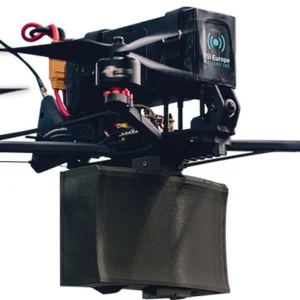
Unmanned Aerial Systems (UAS) provide critical intelligence, surveillance, reconnaissance (ISR), and precision engagement capabilities across military, security, and emergency response operations. These systems range from compact, hand-launched quadcopters to long-endurance fixed-wing platforms equipped with day/night cameras, thermal sensors, and mission-specific payloads. Designed for rapid deployment and ease of control, UAS platforms enhance situational awareness, reduce operator risk, and deliver real-time data from remote or denied environments. Whether used for overwatch, target tracking, or battle damage assessment, UAS technology enables superior decision-making and tactical agility at the edge.
Filters

Frequently Asked Questions
What are unmanned aerial systems used for in defence and security?
UAS are used for missions such as border surveillance, target acquisition, reconnaissance, search and rescue, and threat monitoring, offering real-time intelligence.
How are UAS systems controlled during missions?
Operators control UAS via ground stations or handheld devices, with many systems offering semi-autonomous flight modes, live video feeds, and GPS-based waypoint navigation for streamlined mission execution.
What types of sensors can be integrated into a UAS?
Military-grade UAS can carry EO/IR cameras, thermal imagers, LIDAR, laser rangefinders, and communications relays, allowing them to adapt to ISR, target tracking, or overwatch requirements.
Can UAS be used in poor weather or at night?
Yes. Many advanced UAS are equipped with weather-tolerant designs, infrared cameras, and thermal imaging systems, enabling effective operation in low visibility, nighttime, and challenging environmental conditions.