
Bio-Aerosol Detector
ENVI BioScout
ENVI BioScout
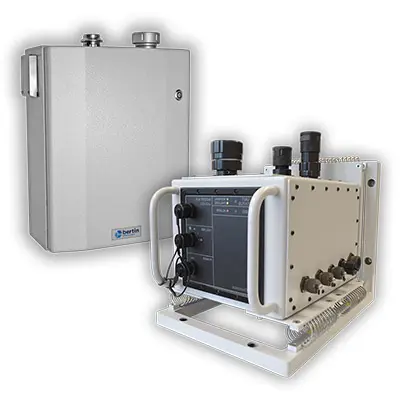
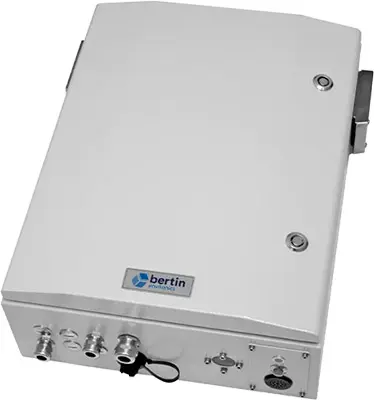
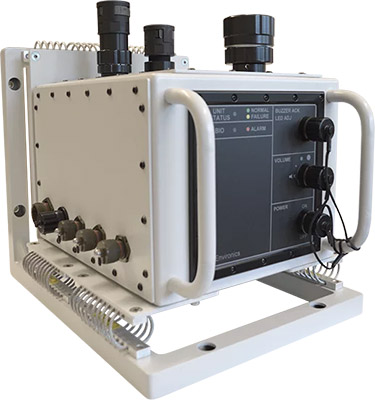
A robust, sensitive bio-aerosol detector that continuously monitors ambient air, issues early warnings for potentially hazardous biological particles, and automatically collects an air sample for follow‑up analysis the moment an alarm triggers. Monitoring runs without consumables; sample cassettes are used only when collection is initiated, keeping lifecycle costs low. The system applies UV‑induced fluorescence and elastic scattering to airborne particles 0.5–10 µm, using a 405 nm diode laser for real‑time discrimination. Collected filters can be analysed by PCR/real‑time PCR or rapid immunoassays (ENVI Assay System) to inform protective actions.
Why teams choose the bio-aerosol detector
- 3-in-1 workflow: continuous monitoring → early warning → automatic sample collection for BWA identification.
- Fast, sensitive alerts: ≤ 100 ACPLA sensitivity with < 30 s response.
- Built for service life: rugged design, –35 °C to +50 °C operation; designed to meet MIL‑STD‑810F/461E.
- Low upkeep: monitoring runs without consumables; short‑time replacements with basic tools.
- System integration: native links to EnviScreen/Operix and 3rd‑party CBRN systems; modular interfaces for add‑on collector, remote alarm or BWA identifier.
How it works
The instrument samples at 2 L/min, analysing fluorescence and scatter signals from particles 0.5–10 µm. When the algorithm flags a bio‑like aerosol, the system auto‑starts a secondary sampler to load a 37 mm filter cassette (PTFE/gelatin options). The filter is then removed for PCR or rapid immunoassay confirmation (e.g., ENVI Assay System).
Technical data
- Detection method: UV fluorescence & elastic scattering at 405 nm; PMT detection.
- Particle size: 0.5–10 µm Sensitivity: ≤ 100 ACPLA Response: < 30 s Flow: 2 L/min.
- Secondary sampling: compatible with 37 mm 3‑piece cassettes; PTFE/gelatin filters.
- Size / mass: ≈ 570 × 440 × 195 mm; ≈ 15.7 kg.
- Power: 85–264 VAC or 19–36 VDC; ≈ 50 W. I/O: Ethernet, RS‑232/RS‑485, digital & relay outputs.
- Environment: 0–90 % RH (non‑cond.); –35 °C to +50 °C operating; –40 °C to +70 °C storage; designed to meet MIL‑STD‑810F/461E.
Typical applications
Fixed or mobile CBRN monitoring, airports/ports/subways/rail, government & crowded venues, mass‑event protection, critical infrastructure, CBRN recon vehicles (land/naval).
FAQs
Does it need consumables to monitor?
No, monitoring is consumable‑free; filters are used when a sample is collected.
Can it feed our C2?
Yes, integrates with EnviScreen/Operix and 3rd‑party systems over Ethernet/serial, with modular options for remote alarms and identifiers.